
Kahat Kabir Suno bhai Sadho….
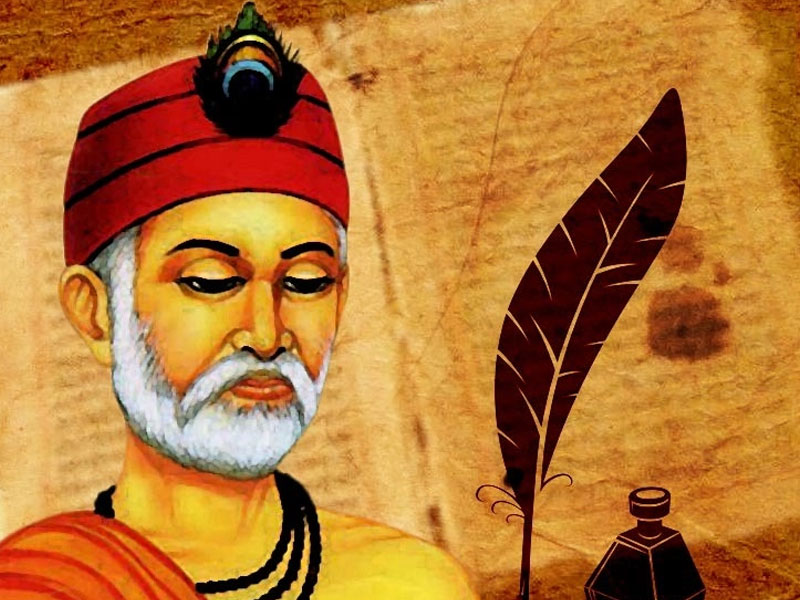
As we explore our inner self and the source of lasting happiness and peace, I am constantly reminded of the great Saint Kabir. Sant Kabir was a person like no other. While there have been many rishis and saints who have spoken about the ultimate truth, Sant Kabir had the talent to say a lot about the human experience in a very few words. Let us see few such examples here and how they convey the essence of the Truth in this journey of finding yourself. I am taking two examples here today, one a couplet and another a poem. Let us look at the couplet first.
Sant Kabir says, ‘Mirg paas kasturi baas, aapu na khojai, khojai ghaas.’
Translated to English, this would mean: The musk is in the deer, but it seeks it not within itself, it wanders in quest of it in grass.
The musk deer that is found in the Himalaya region has a special scent around it. Intrigued by this scent, the musk deer roams all around looking for its source. It doesn’t realise that this scent emanated from its own glands. This is the analogy that comes to mind when I think of the work we do in Finding Self. We are so trained to look for everything outside. Right from our childhood, we are taught to look for validation, acceptance, a sense of belonging, encouragement and all such things outside of us. This quest which begins in childhood, continues through adulthood, only shifting in forms and names, like status, salary, position, fame, etc. Even as one approaches old age, one is taught to seek redemption from a Higher Power, an external Judge who can provide the ultimate approval. All throughout this journey from birth to death, we continue to look only outside. Despite the many disappointments, fleeting achievements, deeper dissatisfaction, we are urged to scale newer heights in search of permanence. Yet, such is the irony that all those who guide others to seek external gratification are still looking for lasting peace and joy themselves. It is like the blind leading the blind along.
The next poem by Sant Kabir beautifully describes the final destination, if we humans unlike the musk deer, were to go looking in the right direction. Let us explore that now. The poem begins like this.
yaa ghat bheetar, baag bageeche
yaa hi mein sirajana haaraa
DHoonDHe re DHoonDhe andhiyaaraa ||
Within this vessel, are gardens and groves,
The one who created them is also within…
and yet you search outside, in the darkness!
He uses the metaphor of a vessel to describe a human being. He says that all the beauty of nature can be found inside your being, and the creator too lies within alone. However, the sad reality is that you continue to search outside, groping in the dark, for both the creator as well as the creation. This verse in itself has deeper layers of meaning if you go looking for it. The vessel that is you, holds all the beauty or the horrible aspects you as creator choose to have. Yet, when you come in touch with the creator aspect of yourself, all that can be seen is only your beauty.
yaa ghaT bheetar heeraa moti
yaa hi mein parakhan haaraa
DHoonDHe re DHoonDhe andhiyaaraa ||
Within this vessel, are diamonds and pearls,
The one who knows their worth is also within…
and yet you search outside, in the darkness!
yaa ghaT bheetar anahad baaje re
yaa hi mein uTHan favaaraa
taa ghaT bheetar saat samandar
yaa hi mein nau lakh taaraa, lakh taaraa ||
DHoonDHe re DHoonDhe andhiyaaraa ||
Within this vessel, reverberates the unstruck sound,
The fountain (of life) springs from within…
Within this vessel, are the 7 oceans,
The 9 millions stars are also contained within…
and yet you search outside, in the darkness!
Kabir continues to describe all the beauty and wealth that can be found within, using metaphors of unimaginable phenomena like the oceans and stars. All of those are intended to emphasise on the unimaginable vastness and joy that is held within, something which we as human beings cannot fathom.
kahe Kabiraa suno bhai saadho
yaa hi mein guru hamaaraa ||
DHoonDHe re DHoonDhe andhiyaaraa ||
Kabir says, listen o seeker!
My Guru himself is within!
and yet you search outside, in the darkness!
In this powerful final verse, Sant Kabir says that even the Guru can be found within. This is a profound statement with many layers of meaning. A Guru is a teacher or Guide who has himself walked the path from his identity to inner divinity and then taken the resolve to help his disciples make the journey in the easiest way possible. A Guru is often considered a necessity for a spiritual journey, and rightfully so. As an individual begins to redirect his search within from the outside, he faces a road with many hurdles, in the form of his past imprints, his Arishadvarga, his old patterns, etc. it requires a person with immense experience and compassion to guide him through. Such a person is the Guru. Yet, there are two aspects for this thought by Sant Kabir. One is that the only way to truly find a Guru is to begin your journey inside with sincerity and dedication, rather than to look out for one. Seeing your earnestness and longing, the Guru himself has to come to you. Thus, you will find your Guru only when you begin to go within. The second aspect is that every genuine Guru’s only goal is to make his disciple seek the truth with independence, without any dependence on the Guru himself. For this, the Guru will continue to guide the disciple inwards, coaxing him to find his own inner light that will shine on his path, illuminating it, to make the journey easier. This inner light is the Guru that one can find within himself, the Guru that Kabir refers to in these final lines. So, both in the beginning and at the end of one’s journey, a Guru can be found only by going deeper within.
Through his various works, Sant Kabir urges his followers with his key message, ‘Look within and you shall find all the reassures you will ever need.’ In order to look within, the biggest hindrance or hurdle comes from the human mind. Hence, much akin to training an animal, it is our job to retrain the mind to help make this journey easier. A story I read recently comes to me, as we discuss this subject. A monk was slowly walking along a road when he heard the sound of a galloping horse. He turned around to see a man riding a horse moving swiftly towards his direction. When the man reached closer, the monk asked him, “Where are you going?”. To which the man replies, “I don’t know, ask the horse” and rode away. Such is the journey most people lead. They jump from thought to thought, idea to idea and emotion to emotion, all the while being directed by the mind. It is only when the rider realises that he can hold the reins and direct the horse, will the journey truly take a meaningful turn. The journey within too needs to begin with self-awareness, a step akin to taking hold of the reins for oneself.
There are no comments